How Are Peptides Tested? Hplc, Coa & Pureness Clarified 2026
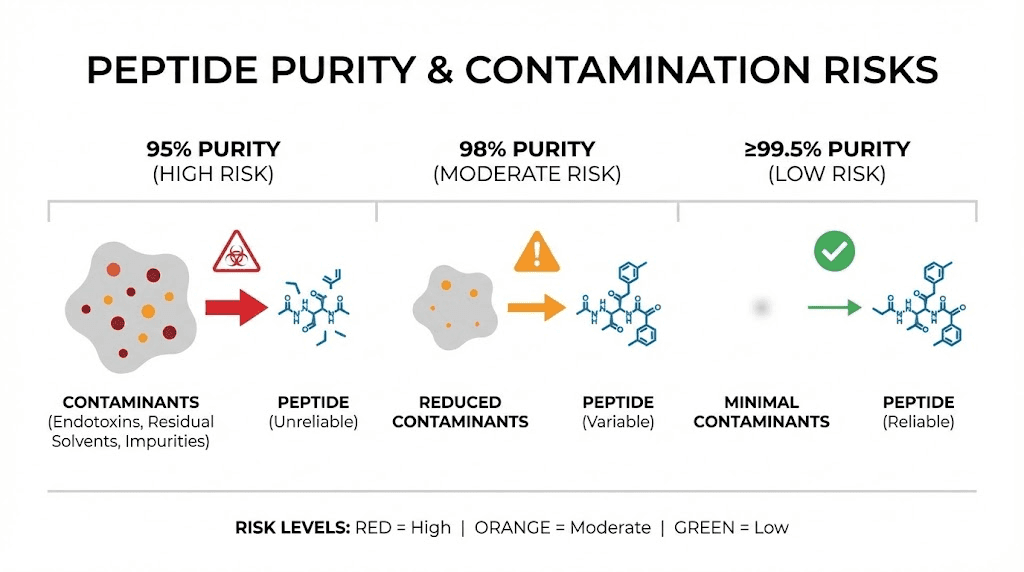
Why Hplc Pureness Screening Matters For Research Peptides 2026 All peptides offered by Pinnacle Lab are desired solely for in-vitro laboratory research usage and are not for human consumption. Peptide screening paperwork ought to be taken Discover more here batch-level analytical proof for research study material, not as clinical-use consent. HPLC can support insurance claims concerning chromatographic pureness, contamination peak concern, and degradation fads when the method is ideal and the chromatogram is offered. At Emirates Peptides, we consist of comprehensive CoAs with every order, giving our customers full transparency about the items they get. Innovative Proteomics supplies peptide pureness evaluation services based on RP-HPLC, and we have RP-HPLC columns that can fulfill your different experimental needs. At the same time, our knowledgeable group tailors speculative programs for consumers. That's why mass spectrometry is run together with HPLC-- it verifies the molecular weight matches the target series. Regulative companies carefully keep track of peptide items, especially those made use of in worsened medication under 503a and 503b standards. For instance, peptides compounded under 503b facilities need to meet higher quality standards contrasted to 503a centers, which concentrate on patient-specific prescriptions. Chromatography is utilized to separate peptide parts and identify contaminations. This strategy consists of HPLC purity analysis and dimension exclusion chromatography (SEC). The appropriate peptide actions through the column in a predictable method, while unwanted materials-- such as remaining pieces, harmed peptides, or contaminations-- move in a different way. As each compound departures the column, a detector gauges it and documents the result as a peak on a graph called a chromatogram. The location under the major peptide optimal, contrasted to the overall location of all optimals, identifies the pureness percent. Research-grade peptides usually reveal a dominant top representing 99% or even more of the overall area, with very little pollutant tops. Accurate analytical validation is essential to validate peptide identification, pureness, and security. Our solutions consist of HPLC and mass spectrometry screening to ensure that peptides satisfy research-grade demands. High-performance liquid chromatography (HPLC) analysis is an analytical method used to separate, identify, and measure elements in a mix [1] In HPLC, a liquid example (e.g. a peptide solution) is injected into a high-pressure circulation of solvent via a column. Different substances elute at different times based upon their interactions with the column, and a detector generates a chromatogram (peaks of signal over time) representing each part [1] HPLC is commonly used to confirm the purity and make-up of peptide samples because of its high solving power and accuracy. It aids validate that peptide-based medications meet the high standards for safety and security and efficiency. Strong Stage Peptide Synthesis (SPPS) is based upon consecutive enhancement of alpha-amino and side chain shielded amino acid residues to an insoluble polymeric support. Quickly, synthesis is carried out by step-by-step enhancement of activated amino acids to the solid support (Wang resin and PEG-PS) starting from the carboxy terminus to the amino terminus. At the end of the synthesis the peptides were cleaved off the material by reagent R (90% TFA, 5% Thioanisole, 3% Ethanedithiol, and 2% Anisole) and based on multiple ether extractions. The System Viability Examination (SST) is utilized to verify that a logical approach was suitable for its designated purpose of the day for the evaluation was done. It is a vital criterion to make sure the top quality of the procedure for right dimensions. System viability proves that the system is working flawlessly prior to the evaluation on HPLC or any kind of various other system, and it is required to be done before every example analysis. Peptide pureness describes the percent of the wanted peptide about all observable parts in a sample. Impurities originate from synthesis mistakes, destruction, insufficient deprotection, trimmed versions, oxidation, or sample handling. Ion chromatography can additionally divide ionic substances, ion-exchange splitting up settings, and inorganic anions or cations. Our projects with NorthEast BioLab consist of successful technique development, recognition, stability research studies during Medical Phase I-- IV studies. All substances reviewed in this post are meant strictly for in-vitro study and laboratory utilize just. They are not planned for human intake, vet use, or any type of clinical application. Researchers are accountable for making certain compliance with all applicable guidelines in their jurisdiction. Reversed-phase chromatography supplies the fastest picture of family member pureness. Chiral methods can deal with enantiomeric pureness where stereochemistry is a problem. Residual-solvent or water-content examinations can matter in manufacturing or stability contexts. These are beneficial in the right setup, yet they ought to be taken method-specific evidence instead of a global substitute for HPLC and MS. Peptide testing is effective, however researchers should read the scope of each approach very carefully.
Targeting Cookies
- The friend web page on why 99 percent purity issues describes why small contamination percentages can still matter in delicate in-vitro assays.
- Our services include HPLC and mass spectrometry screening to ensure that peptides meet research-grade needs.
- With that said being said, developing peptides can be complicated because they deteriorate conveniently and are incredibly conscious environmental conditions.
- Purity is determined by separating the main height location by the complete integrated area of all UV-absorbing optimals.
What Are The Significant Applications Of Hplc Screening?
Just how much time does an HPLC test take?
Time Required for HPLC EDTA Examination Records + Following Steps
As soon as you have scheduled the examination and the phlebotomist has actually accumulated your blood example, the example is taken to the lab, where the examination is performed. It generally takes 24-48 hours for the examination report to Have a peek here be produced.